- image — hero product photo + copy
- text — advertiser logo + copy, no hero image
Which mode applies
The Native request offers two image assets:
Asset
ids are 0-based (title=0 … CTA=5); your response must echo the same ids the request sent.
Both are optional in the request. Which one you populate determines the render:
Rule of thumb: send the product photo in asset 3 if you have one; otherwise send the logo in asset 4.
image
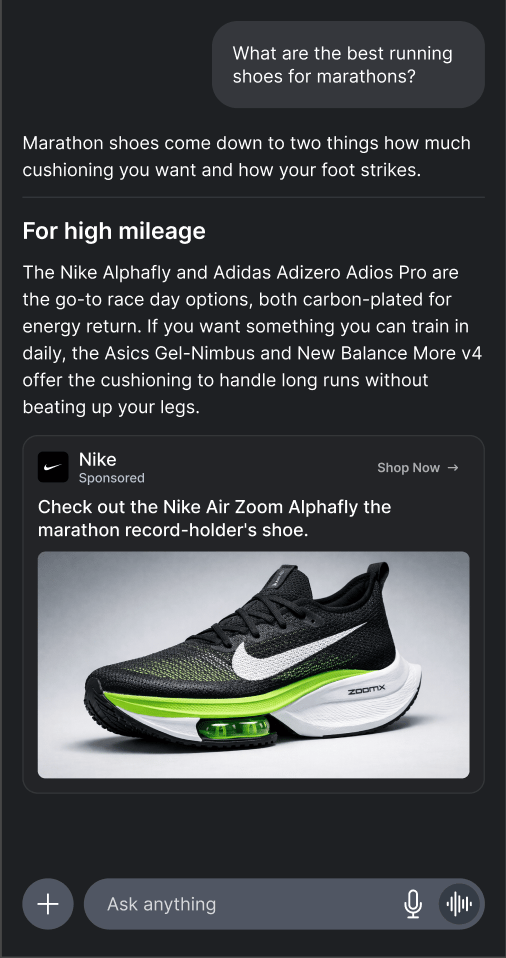
Sponsored message rendered with a hero product image
text
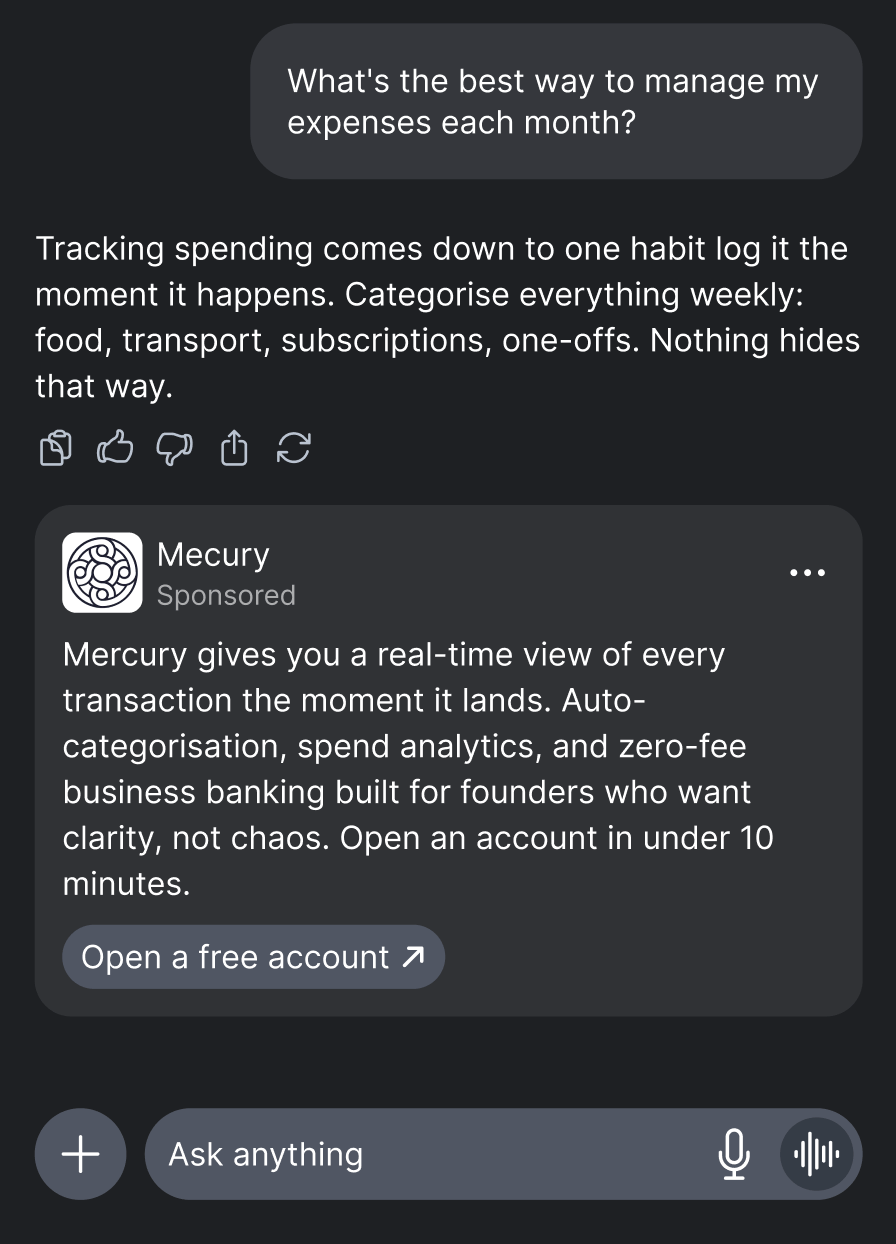
Sponsored message rendered compactly with logo + copy
Publisher constraints
The mode the publisher accepts is encoded inimp[].tagid — there is no separate ext.thrad.config flag to parse:
*_image— publisher accepts both modes. Asset 3 (main image) is optional; asset 4 (logo) is optional. Image preferred.*_text— publisher cannot render images. The Native request omits asset 3 entirely and marks asset 4 (logo) as required. If your response includesimage_url(asset 3) on a text-mode request, the SSP drops it server-side before render — your bid still wins on the logo if asset 4 is populated, otherwise the bid is silently lost.